No products in the cart.
3 X FREE SEEDS FOR EVERY £100 SPENT
6 X FREE SEEDS FOR EVERY £200 SPENT
9 X FREE SEEDS FOR EVERY £300 SPENT
FOLLOW US ON INSTAGRAM : @drorganicslivingsoil
0
Grow Guide
Light Cycles
18hrs Vegetative Growth
For seedling and vegetative growth using organic living soil, we recommend a light cycle of 18/6. This means the lights are on for 18 hours and off for 6 hours. This cycle supports strong vegetative growth in most plants and helps improve overall soil health and plant development when used with a proper living soil grow guide. When growing plants using an artificial light source, you are able to control, to some extent, the overall size your plants will grow. By following correct organic gardening practices alongside your lighting schedule, you can encourage healthier plants, stronger roots, and better long-term plant growth in a controlled environment.
12 hrs Flowering/Fruiting
By decreasing the light cycle to 12/12 (12 hours on and 12 hours off), you can transition your plants into the flowering stage when using an organic living soil grow guide. This change supports natural flowering growth and helps the plant focus on bud or fruit development while maintaining strong soil health and nutrient uptake from living soil systems. This flowering stage usually lasts around 8–10 weeks, depending on the plant variety you are growing. Following proper organic gardening practices during this stage ensures better plant growth, improved yield quality, and healthier overall development.


Grow Guide
Environment
Like humans, plants produce a variety of hormones that help regulate their internal functions, especially when grown using an organic living soil grow guide. These natural processes work together with soil health and organic gardening practices to support balanced plant growth.
Five major plant hormone classes include:
-Auxins: Promote stem elongation and root growth
-Cytokinins: Promote cell division and overall plant development
-Gibberellins: Promote stem elongation and flowering
-Ethylene: Promotes fruit ripening
-Abscisic Acid: Inhibits cell growth during times of stress
Hormones are synthesized in one part of the plant and typically transferred to another part of the plant, influencing overall development and structure. For example, auxins created in the apical (dominant) bud are often transported to the root zone to support root growth or to lower stem areas to suppress lateral bud development. Understanding these natural processes is important in organic gardening and living soil systems because changes in one part of the plant can impact the entire structure. For example, topping the dominant bud reduces auxin production, which can encourage more lateral bud growth and improved plant structure.
Grow Guide
Watering/Feeding
Throughout the plant’s life, it is ideal to maintain a wet/dry cycle when following a living soil grow guide, as this encourages strong root development and improves overall soil health. This method helps support balanced plant growth while ensuring the soil never completely dries out.
As your plants mature, you will need to increase the frequency of watering. In organic gardening, watering living soil is a careful balance—you should avoid overwatering while also preventing the soil from becoming fully dry between watering cycles. Allow the soil to begin drying slightly, but never let it reach complete dryness.
A good practice is to feel the soil a few inches below the surface to assess moisture levels. This helps maintain proper hydration, supports microbial activity in organic living soil, and promotes healthy root systems and consistent plant development.
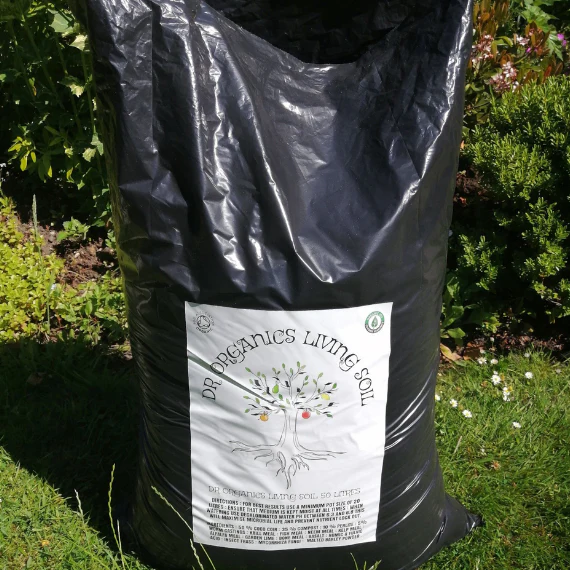
Due to the complex blend of nutrients in Dr Organics Living Soil there is no need to add any liquid plant food, just add tap water or rain water. Leave water to stand overnight before watering as this will allow it to reach room temperature and avoid shocking the plant.
Bloom Amendment 2-8-10 For customers who want to boost the flower production of their plants. Simply add 2 grams (per litre of soil in the pot) to the top of the pot mixing it with soil and watering in. It’s that simple.
Growing Made Easy We have spent time developing the ideal blend for your plants so that you can relax in the knowledge that, as long as they are watered, they are growing at optimum speed and efficacy.

Get in Touch Here!
If you Have any questions?

Company
Contact Us
About Us
All of our organic soil is biodegradable and 100% from British soil. We use a multitude of dried amendments mixed through our compost to produce a superior soil for growing plants and vegetables.
Cart (0 items)